Hinterlands: a joint exhibition with Aaron Yeandle
It’s now less than five weeks until the private view of the joint exhibition that Aaron and I have been planning for the last nine months. We are at the point of jumping around hyperactively trying to ensure all the other elements of the planning are moving in the right direction. We really want the work that we end up showing to gel together in a way that highlights our differences and similarities while feeling like a coherent and harmonious whole.
Aaron has recently got the printer to produce proof images of his work to ensure that the colour and quality is as it should be.
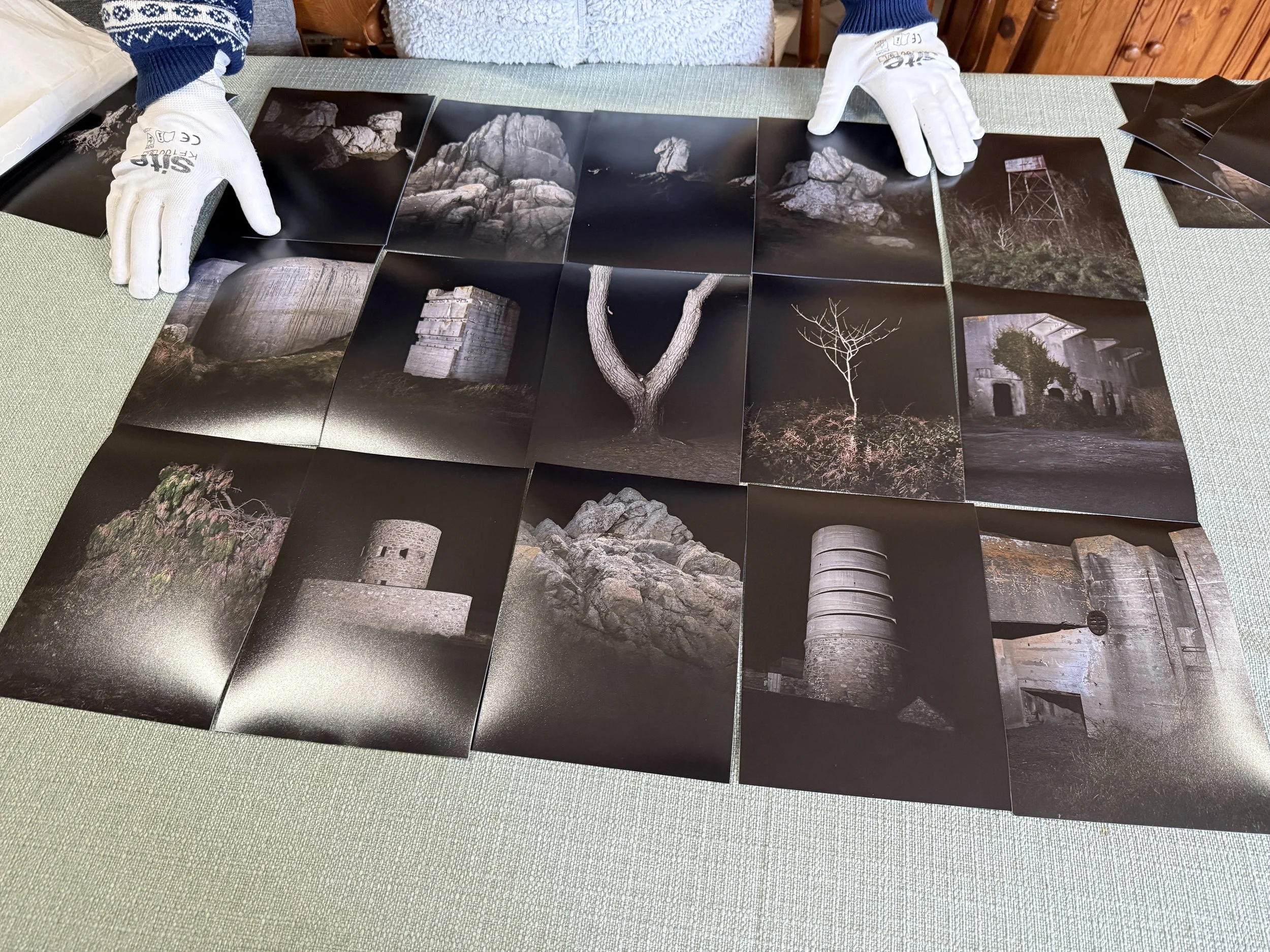
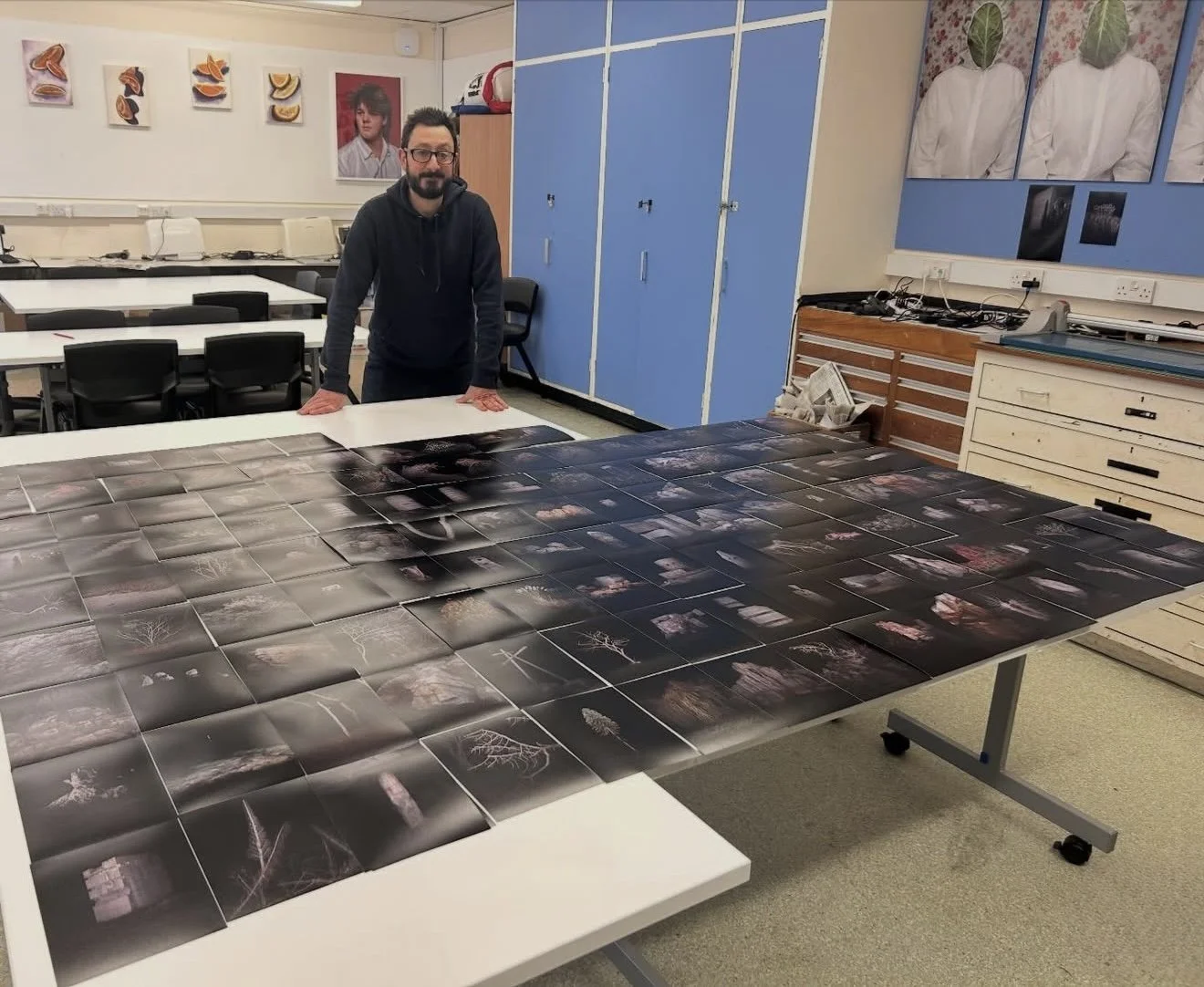
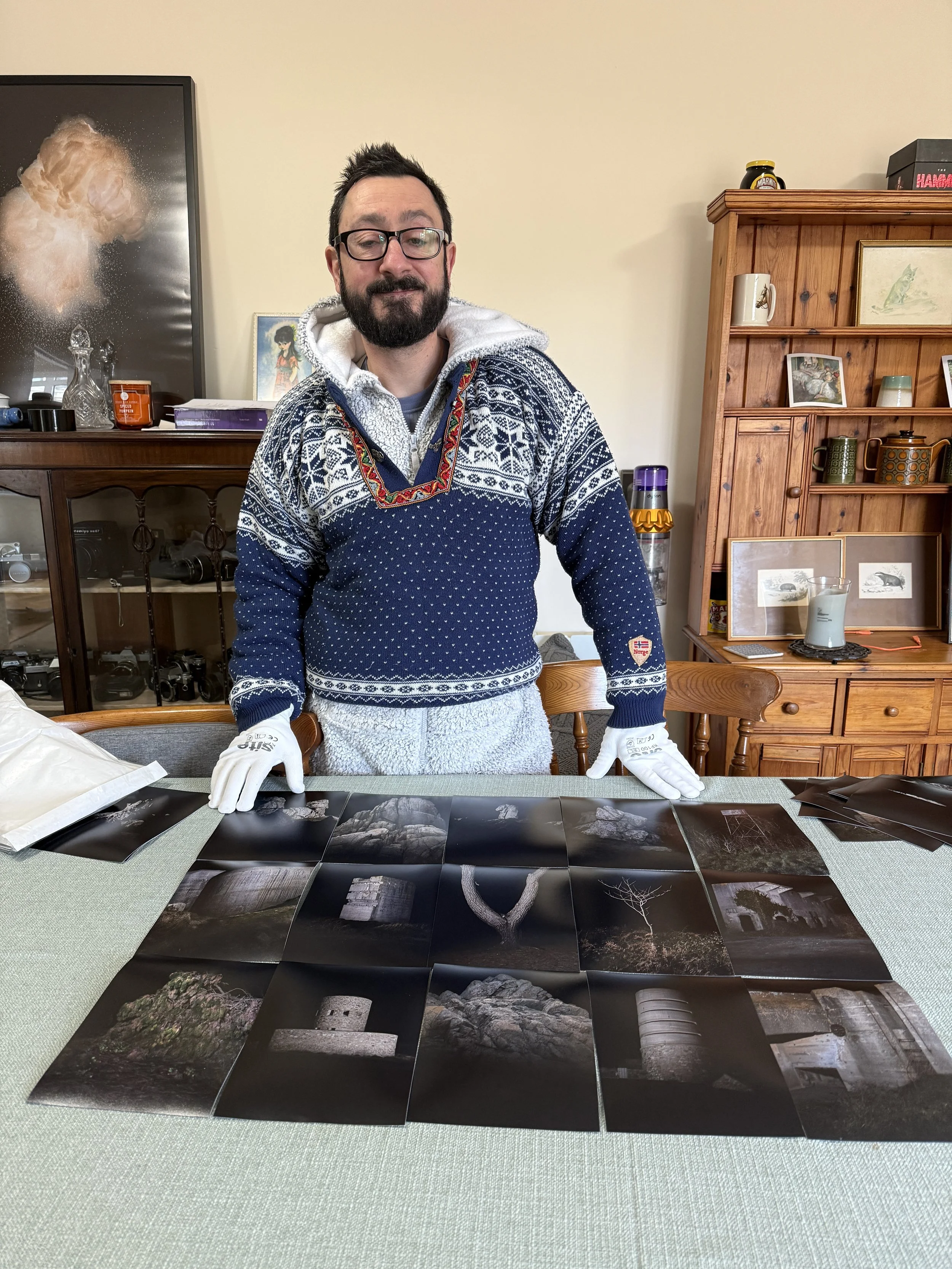
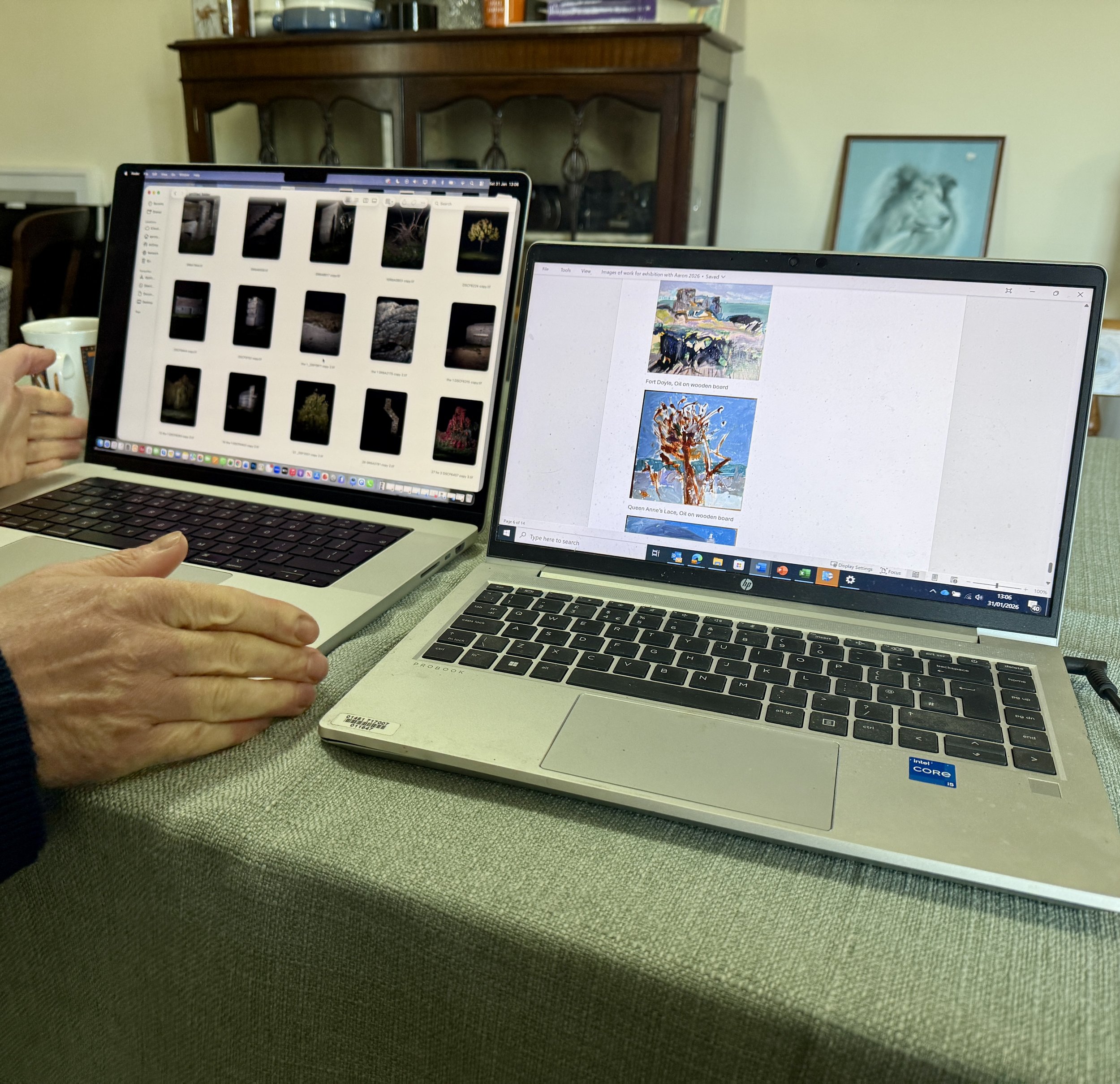
I’ve been mulling over framing or not framing, along with how to display some of the relevant contextual material (archive photographs, and related objects and ephemera), plus writing a press release and accompanying text for the gallery space. The latter is always a balancing act, weighing up how much to reveal in the writing, and how much to leave open to give the viewer space to interpret.
The title of the exhibition, “Hinterlands”, refers to the land immediately next to or inland from the coast, but it is also applied in a more metaphorical sense, to that which is beyond the visible or known. We settled on the title due to the common thread that links both our work – a tendency to be drawn to the uncanny, weird or eerie within landscape and place.
This blog post was intended to be about the pulling together of the curation side of an exhibition - something I have little experience of. However, writing material for the exhibition in the last few weeks has really forced me to think clearly about what I am trying to say and do with my work and why making art is important to me. It has also made me step back further, to try to understand why fine art practice is important in the world today, particularly at a point in history when truth, fact and values all seem skewed.
I think there is often a misconception within the public domain about what art is about. Importance is often ascribed to work that is representationally a good likeness; to the picturesque and nostalgic; and to art that that blue chip galleries and the art market define as valuable.
I prefer to think of art practice and creativity as a natural and integral part of life; something that is open to everyone that is not a contained activity, but is part of a way of being in the world. Something that is generous and compassionate; collective rather than atomistic; and supportive of people, places and environments. Art is not an experience, a feeling or an idea. It is not the product of genius and it is most certainly not about monetising an end product for obscene amounts of money (though at the other extreme artists too need to eat and need to be paid fairly for what they do!). Art is a practice. It is where something is materially realised in a language that is personal but accessible. A language that is developed and refined and made specific to what the painter, photographer, maker wants to communicate.
In painting this may be through experimenting with materials, colour and mark, and by utilising accident and chance as well as deliberation. Sometimes the most interesting work arises out of accident or frustration.
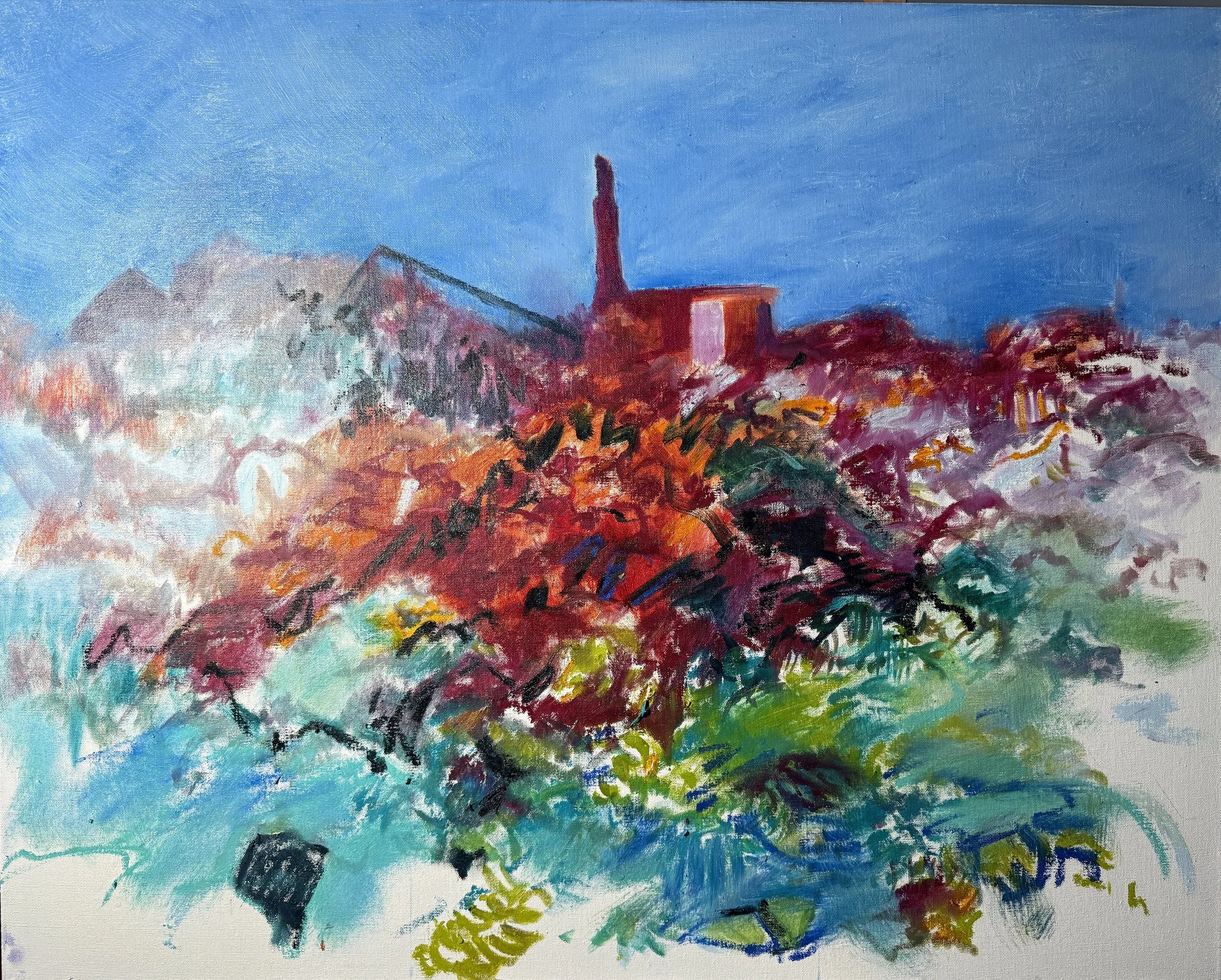
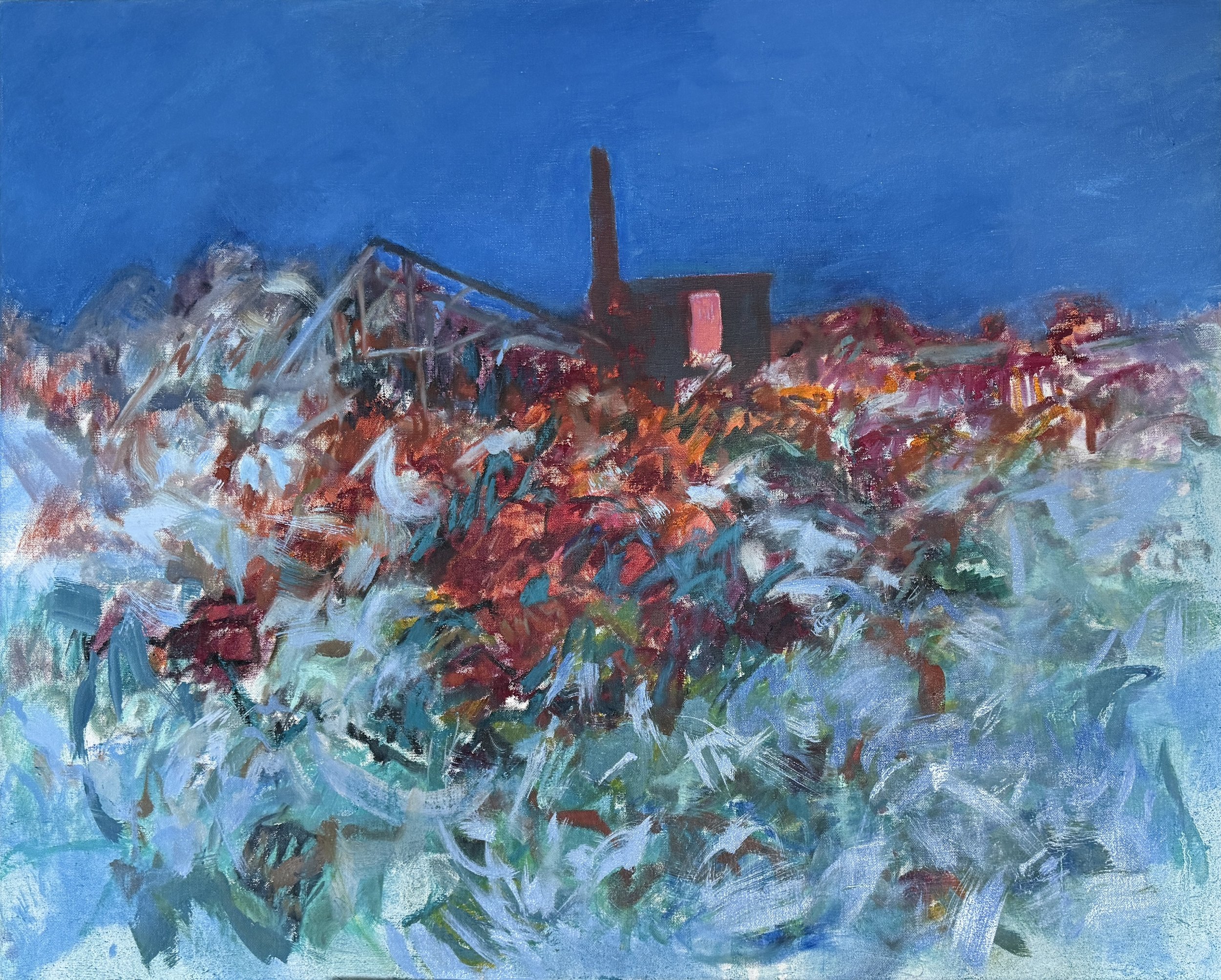
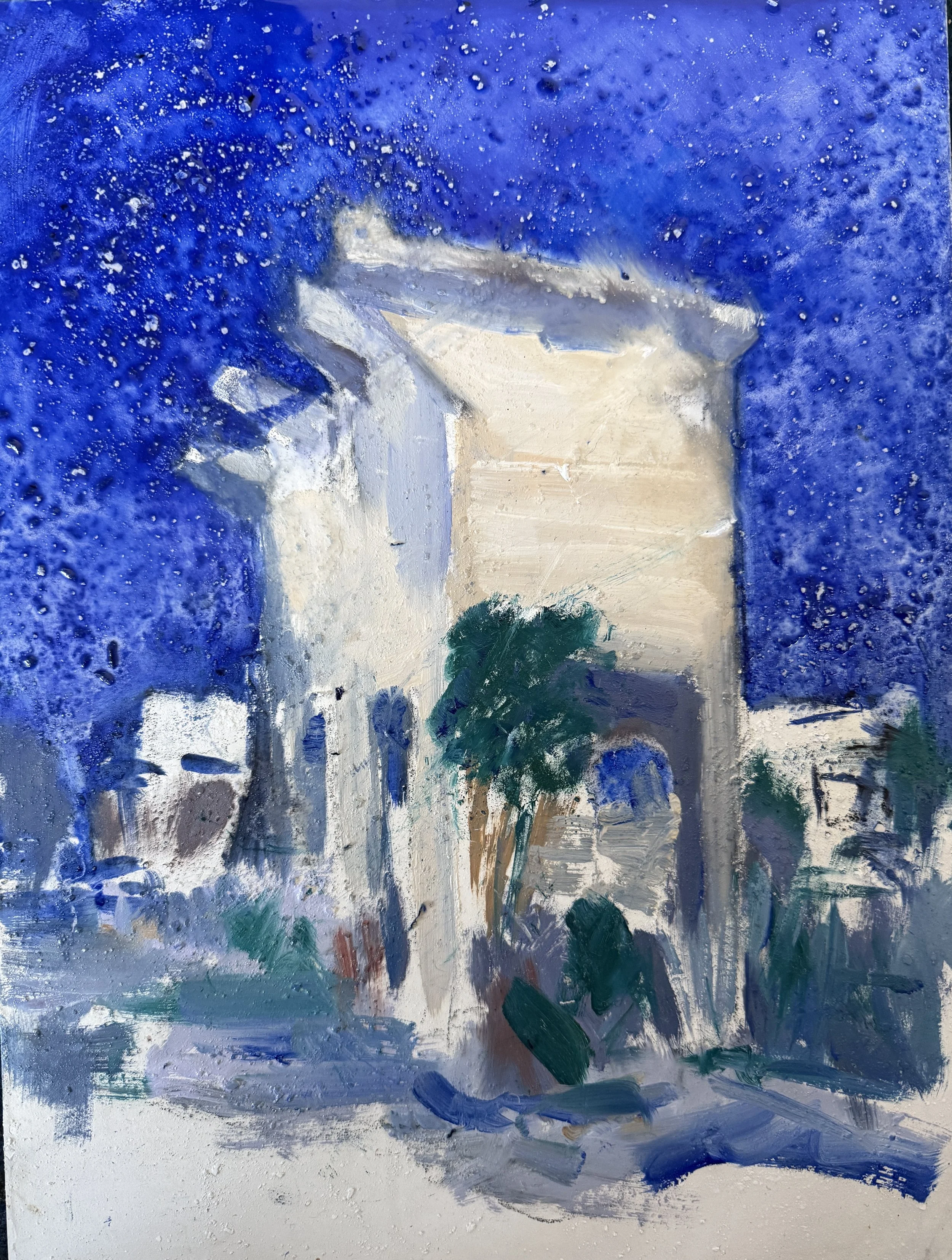
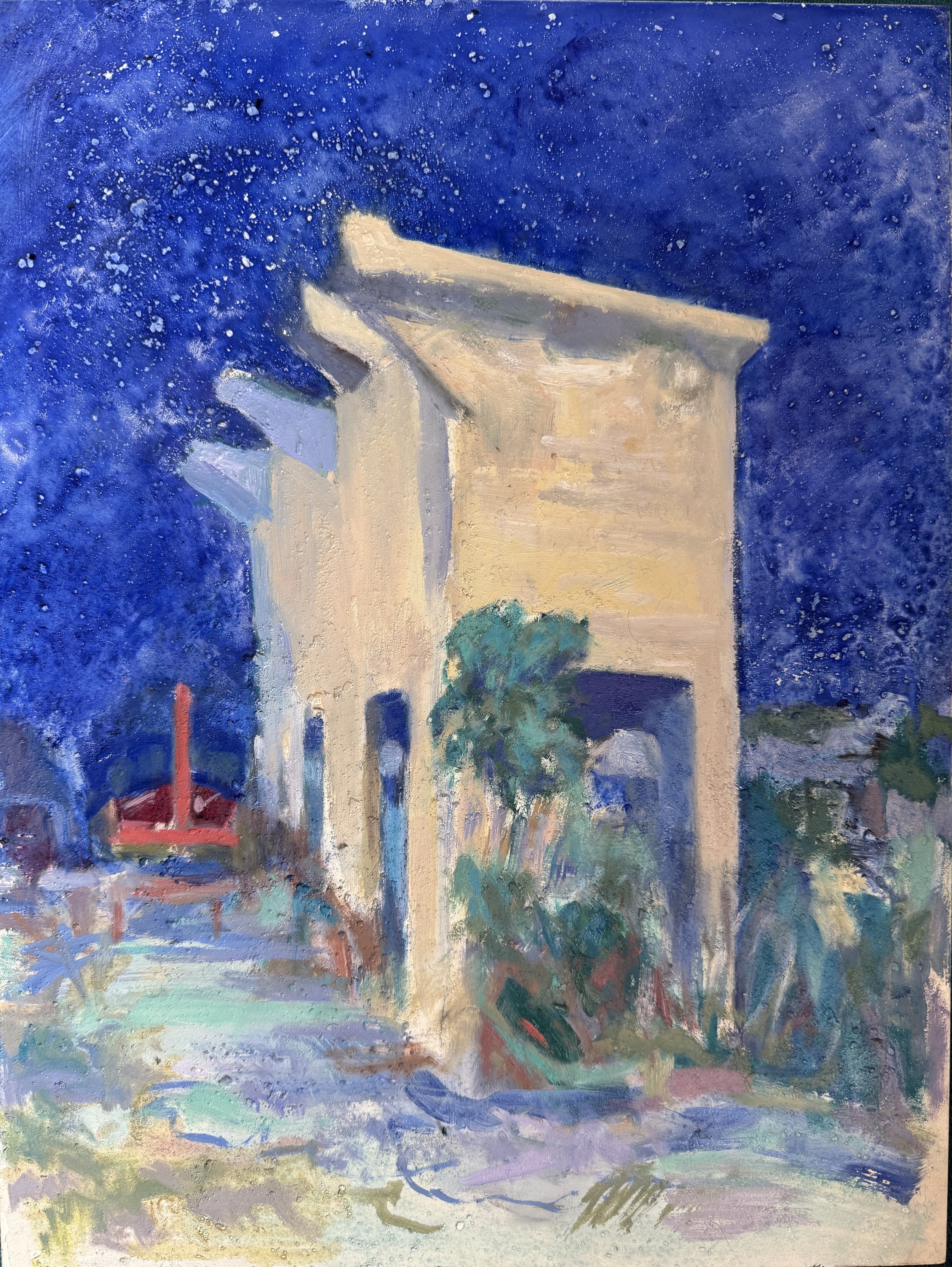
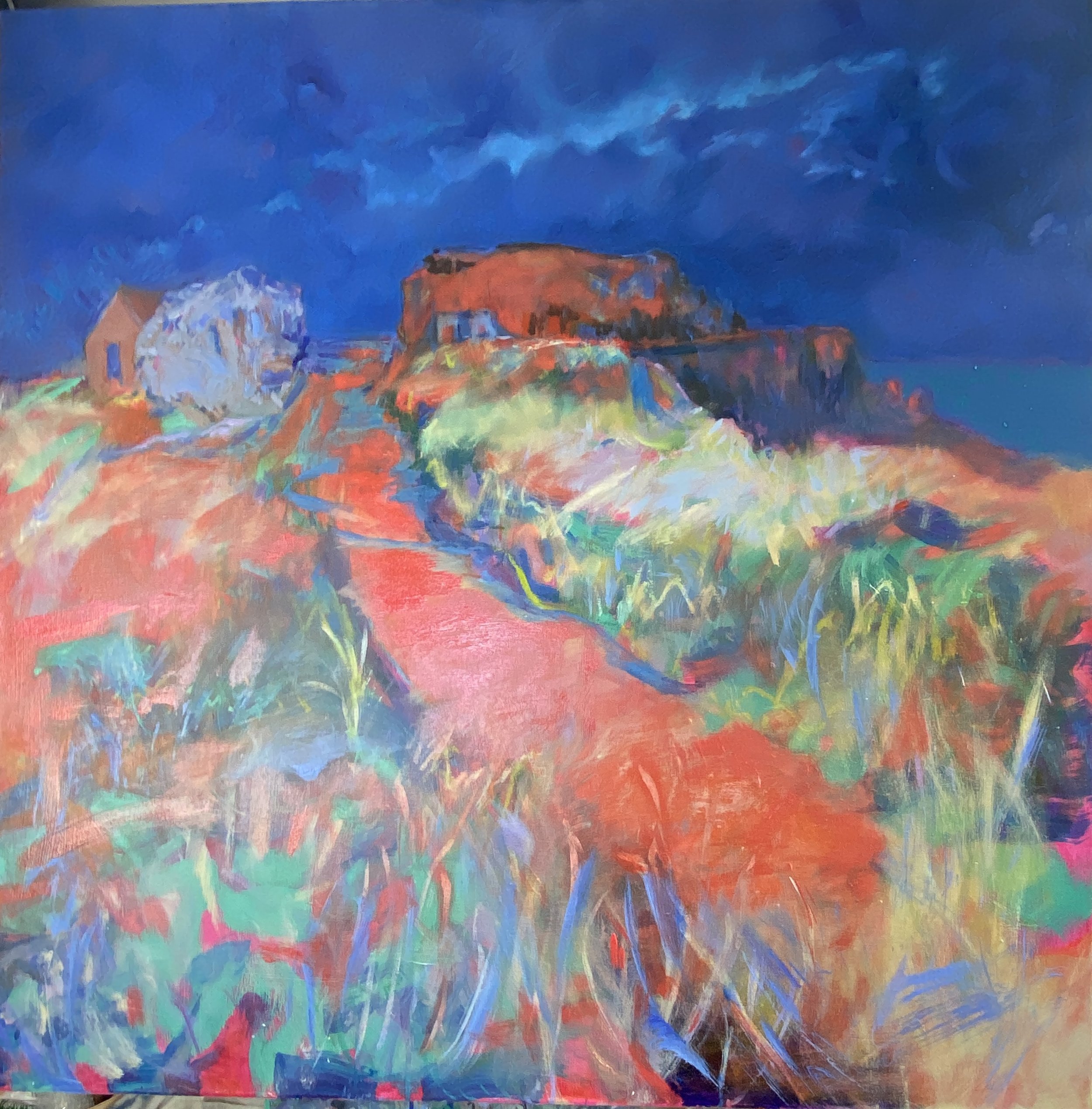
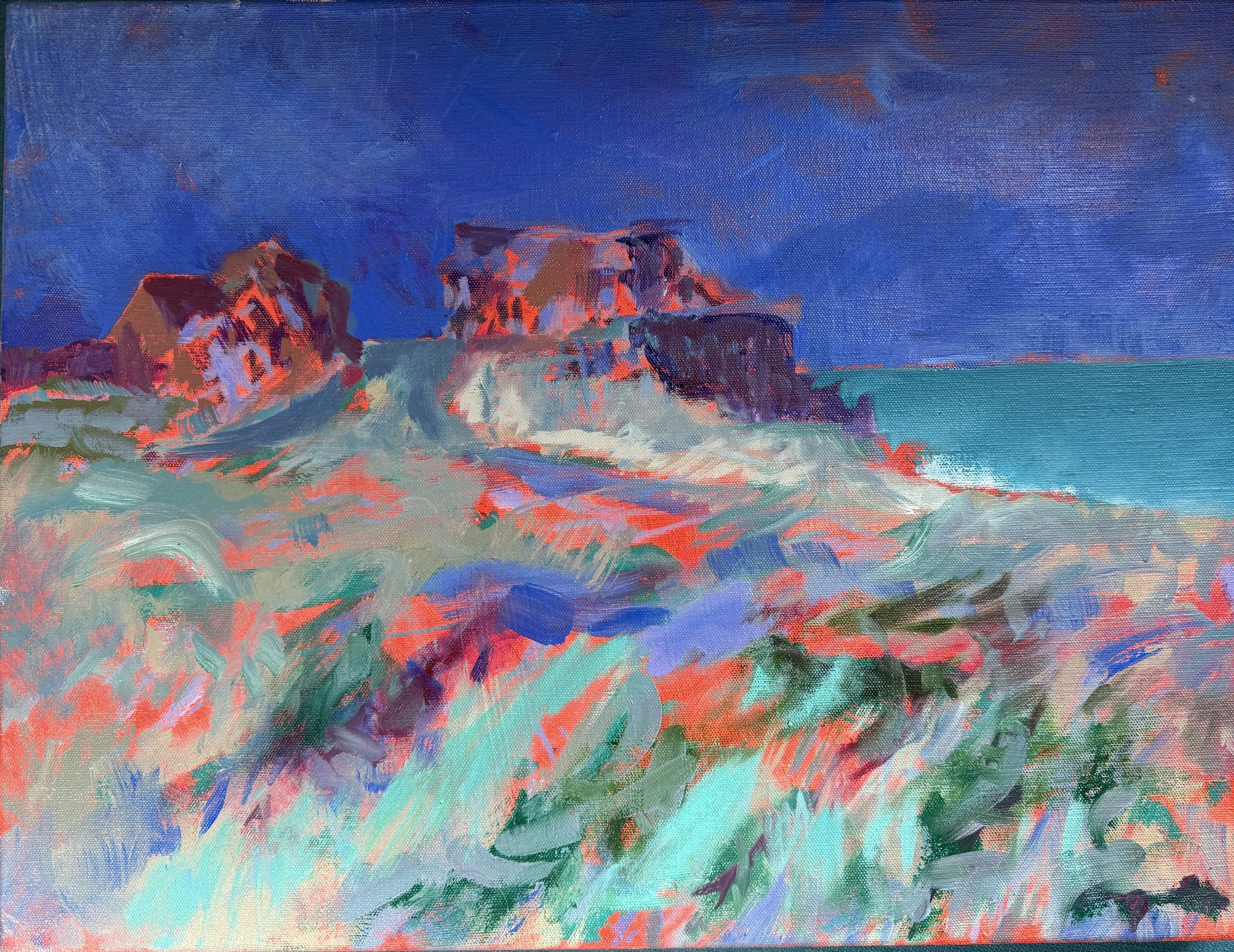
Left to right: Recent examples of accidents in my work.
(1&2) a painting which became too overwhelmed with colour. In frustration I muted it rather feverishly with a scrawl of overpainting thinking that I would soften it with other greys later. This muffled mark-making suddenly made the image mysterious. Is the silvery blue a soft tamping of frost icing over the early morning common land, or something more sinister - the result of an environmental disaster or apocalyptic moment?
(3&4) when trying to remove texture from a surface area of sky by washing over it with turps substitute, the painting on wooden panel open up spatially to reveal the bare whiteness of the oyster shell fragments underneath the ultramarine of the sky, giving the impression of a constellation of stars.
(5&6) a small painting quickly and loosely sketched out to try to resolve a larger painting of the same composition. As this second painting was far more successful in its brevity that the mucked around with original painting, the latter then became redundant.
In fine art photography, similar factors apply. Interesting work is not necessarily work which is pristine, or made in high quality fine art print. A blurry fog or nasty off-balance composition can be more powerful and surprising if it serves the purpose of what is being conveyed and helps develop a distinctive voice.
…….
Up until 2020, I had a gap of 22 years of not painting, having spent most of my 20s following art school continuing my practice. I feel like I am making up for lost time. I don’t want to waste a minute outside of working hours that could be spent both making and thinking about my painting, and the discourse of art that feeds into it.
I am not the same person that I was in the 1990s and I think my work is far more successful as a result of my time doing other things. Having held a variety of non art-related jobs since 1993, all of these - from retail, waitressing and chambermaiding (is that still a word? maid for Godssakes!), apple picking in Sussex, cooking in a vegetarian cafe, and since 2002, working in social policy, have made me see the world in a different light. All have been important experiences and have fed into my world view.
However, living in the beautiful affluent island that I was fortunate to have arbitrarily been born in, and working with people who are at the precarious end of the wealth scale, has made me realise how invisible issues such as poverty, homelessness, displacement and abuse are to the many. This accompanied by the casual scapegoating of marginalised groups for economic greed or political gain makes my blood boil. In my island home, those who can’t afford to heat their houses or buy daily staples live cheek by jowl with multi-millionaires. This is hidden to the majority, either because they happily exist in their own bubbles and tribes, or because they do not wish to see.
I think it is important for society to be able to see the world from the perspective of the outsider. This is something that has gradually and fairly unconsciously fed into my painting practice, though I’ve never intended to make overtly political work. I have started thinking that this has some connection with my interest in the jarring and the out of kilter in the landscape.
The late, wonderful Mark Fisher, in his writing The Weird and the Eerie separates the weird and the eerie from the uncanny /unheimlich (unhomely). (And bear with me with this rather lengthy quote)Fisher states:
“What the weird and the eerie have in common is a preoccupation with the strange. The strange — not the horrific. The allure that the weird and the eerie possess is not captured by the idea that we “enjoy what scares us”. It has, rather, to do with a fascination for the outside, for that which lies beyond standard perception, cognition and experience. … [The weird and the eerie] allow us to see the inside from the perspective of the outside. As we shall see, the weird is that which does not belong. The weird brings to the familiar something which ordinarily lies beyond it, and which cannot be reconciled with the “homely” (even as its negation). The form that is perhaps most appropriate to the weird is montage — the conjoining of two or more things which do not belong together. Hence the predilection within surrealism for the weird, which understood the unconscious as a montage-machine, a generator of weird juxtapositions. Hence also the reason that Jacques Lacan — rising to the challenge posed by surrealism and the rest of aesthetic modernism — could move towards a weird psychoanalysis, in which the death drive, dreams and the unconscious become untethered from any naturalisation or sense of homeliness.
At first glance, the eerie might seem to be closer to the unheimlich than to the weird. Yet, like the weird, the eerie is also fundamentally to do with the outside, and here we can understand the outside in a straightforwardly empirical as well as a more abstract transcendental sense. A sense of the eerie seldom clings to enclosed and inhabited domestic spaces; we find the eerie more readily in landscapes partially emptied of the human. What happened to produce these ruins, this disappearance? What kind of entity was involved? What kind of thing was it that emitted such an eerie cry? As we can see from these examples, the eerie is fundamentally tied up with questions of agency. What kind of agent is acting here? Is there an agent at all? These questions can be posed in a psychoanalytic register — if we are not who we think we are, what are we? — but they also apply to the forces governing capitalist society. Capital is at every level an eerie entity: conjured out of nothing, capital nevertheless exerts more influence than any allegedly substantial entity.”
Today the art world and the art market are so often conflated that the human value of making art in a generative, communal and expansive way is often overlooked. It’s preferable to those who wish to maintain the status quo for creative energies to be diverted towards maintaining the existing relations of capitalism by commodifying the art work to the degree that it is inaccessible to most people, or shifting art’s purpose to either sell products or to provide entertainment value or spectacle.
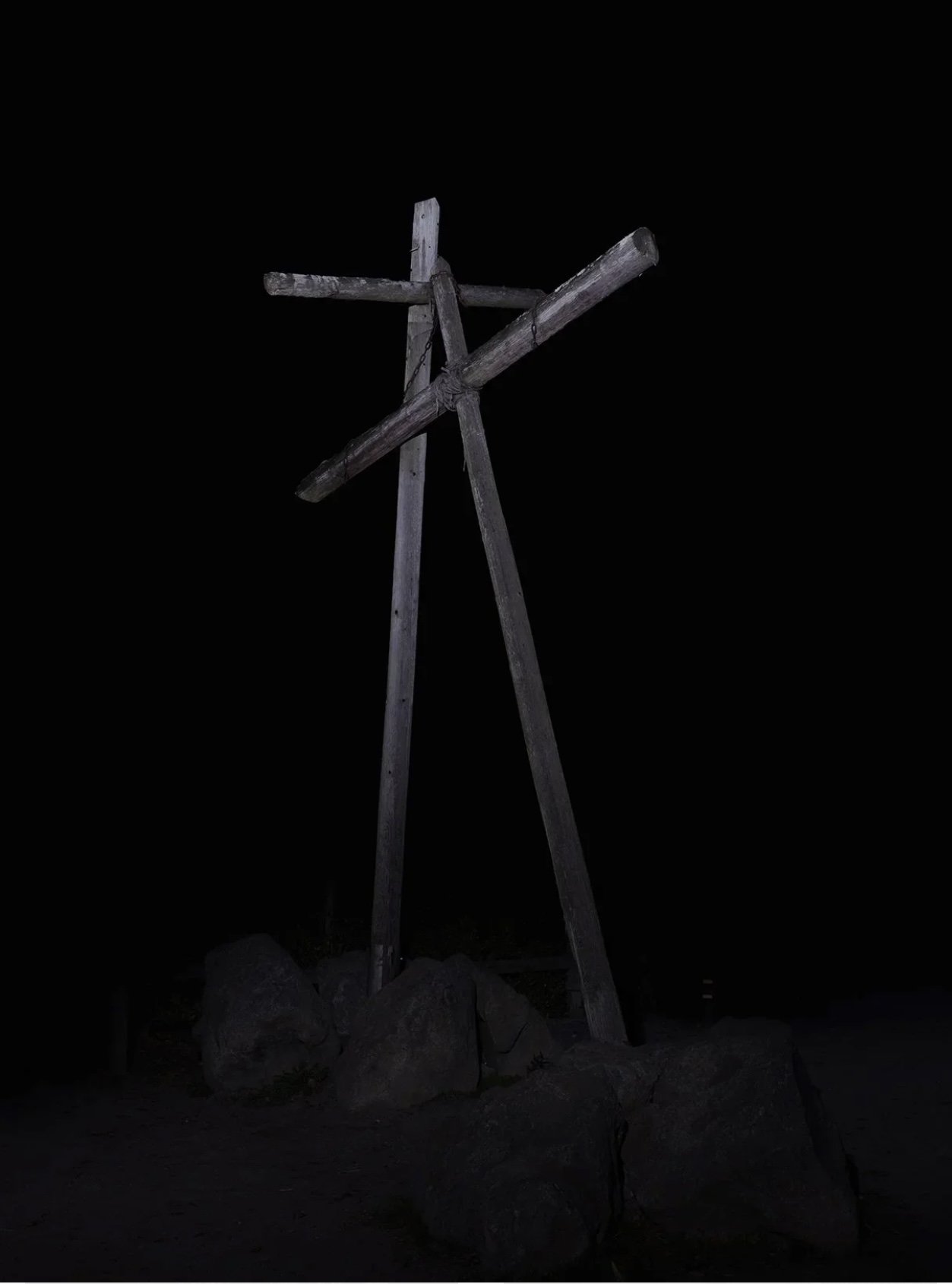
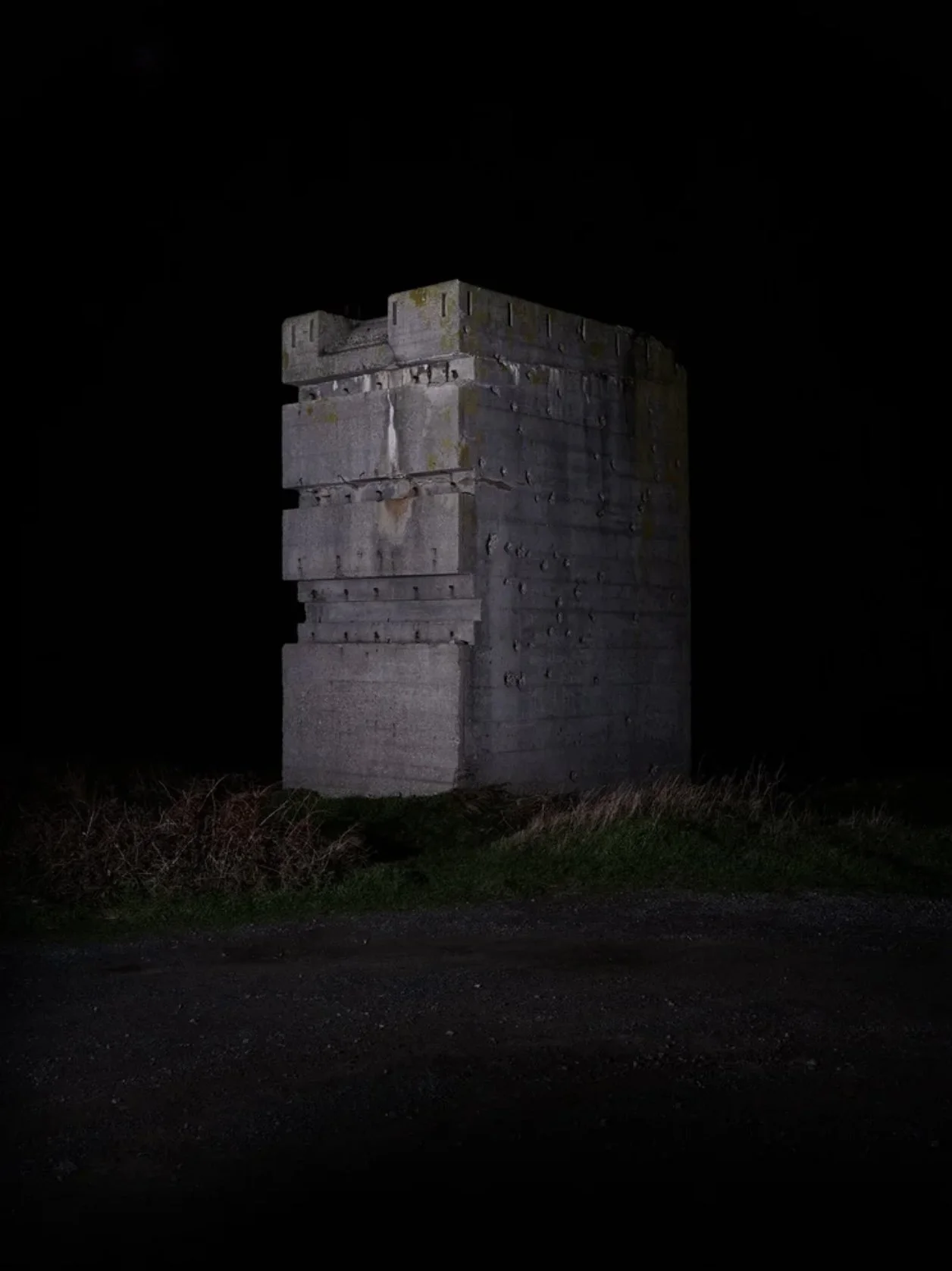
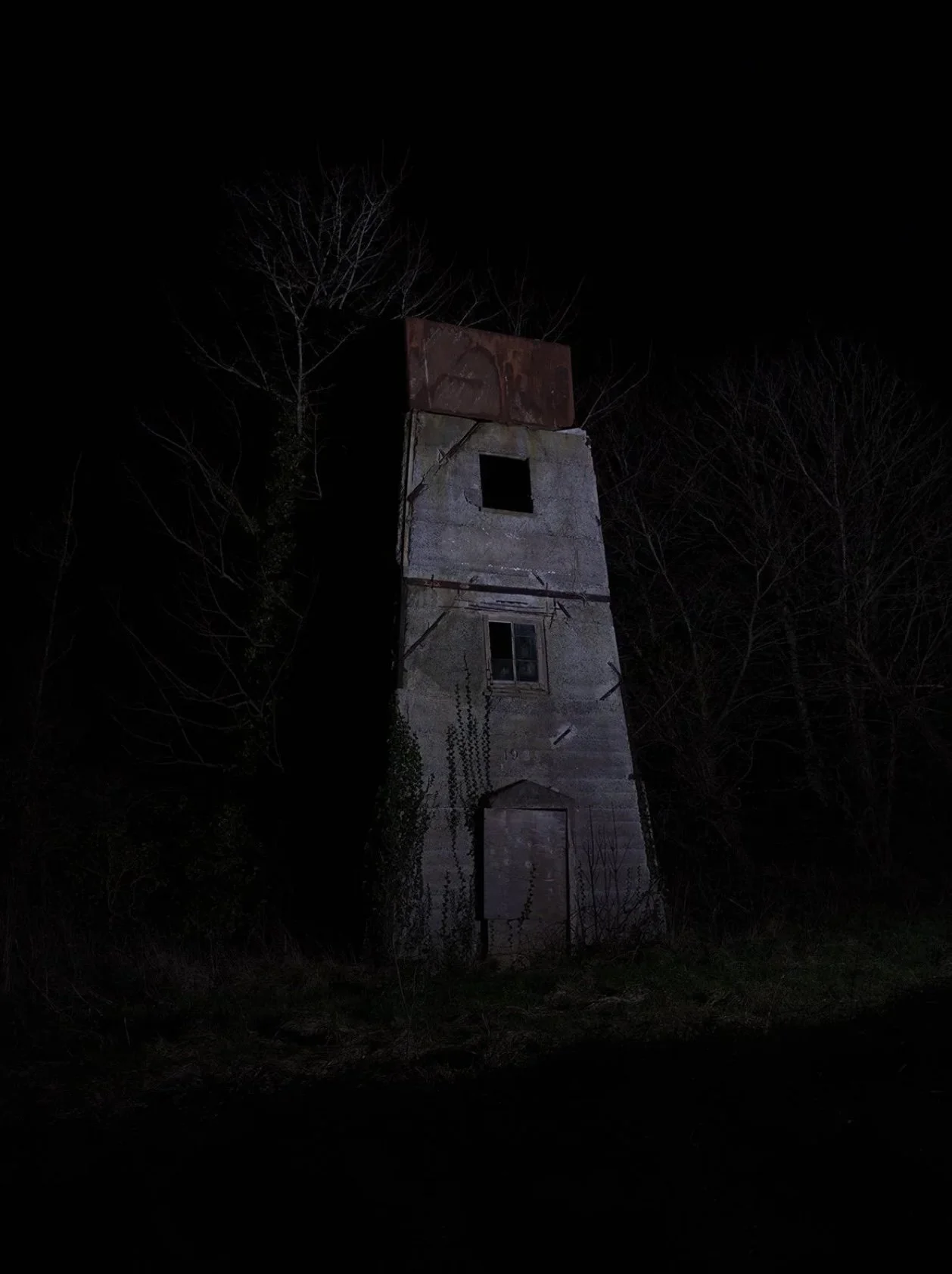
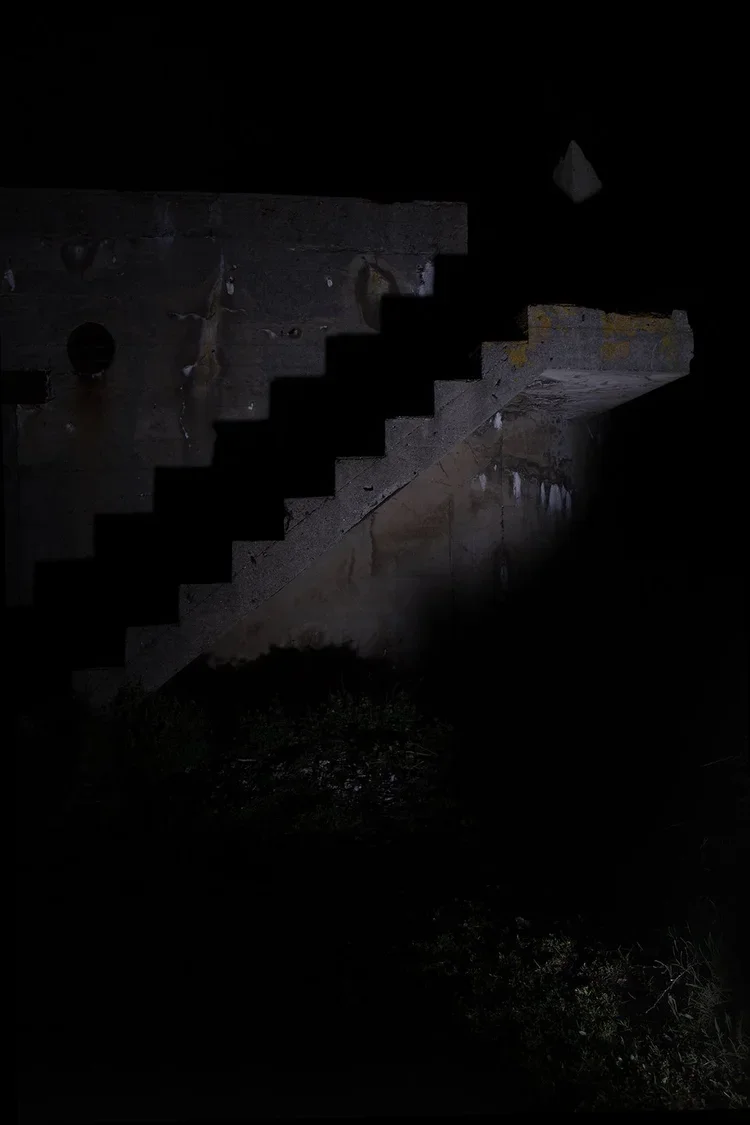
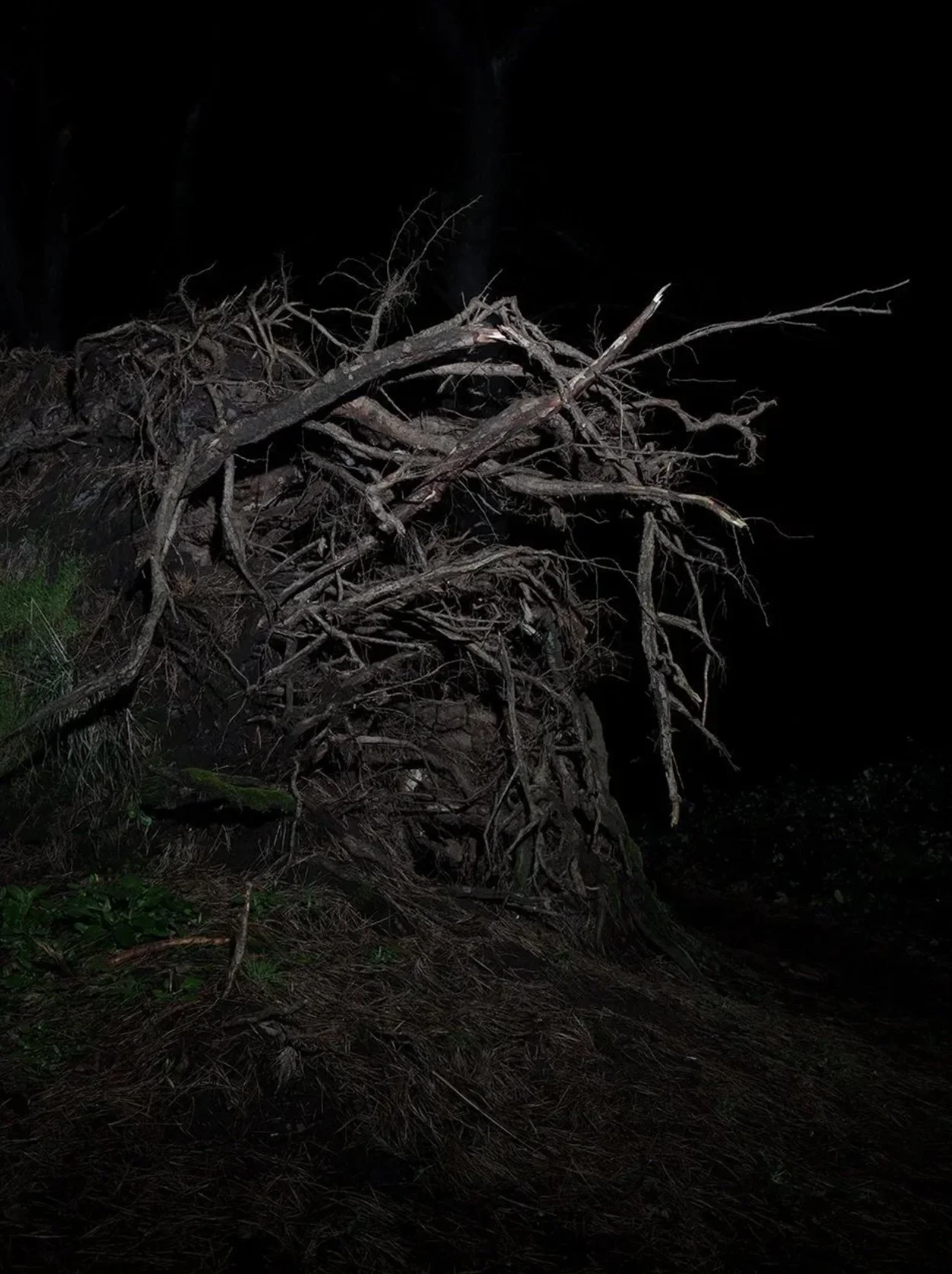
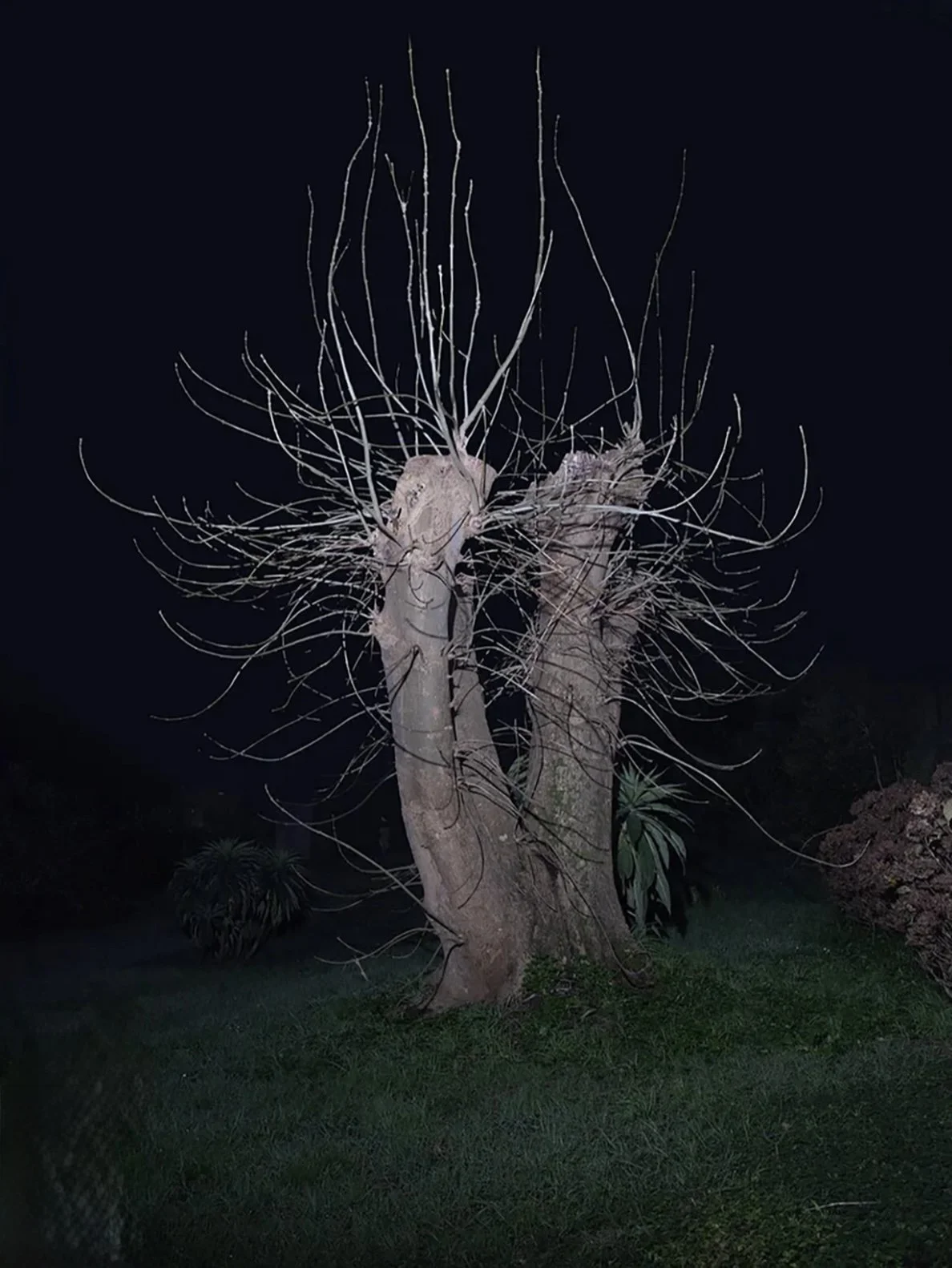
I can’t speak for Aaron on why the strange and the eerie resonate with him. His work is gentle and romantic as well as eerie and mysterious, but l know that, like me, a sense of outsiderhood earlier in life may well feed into his work, along with the need to make work that is unsettling as well as beautiful.
Unlike me, he does not get drawn into politics and want to throw the radio across the room when Farage is ceaselessly given airtime! Nevertheless, our work feels connected in its exploration of the known and the unknown, the metaphysical and enchanted, and the way the work is elicited through sensation and the haptic.
Aaron and my work will be on display at the Gate House Gallery from Friday 27th March until Friday 17th April 2026.
Just as a note for those like me who love a good read recommendation, do check out a wonderful essay by Matthew Burrows that I came across a week or two ago. This taps into related themes. It considers why painting and art matters as a way of keeping certain values alive at a time when universal human rights, truth and knowledge are being eroded. Do read it - The Good, the True, and the Beautiful. It can be found on Substack.